Start with a simple, recognizable outline
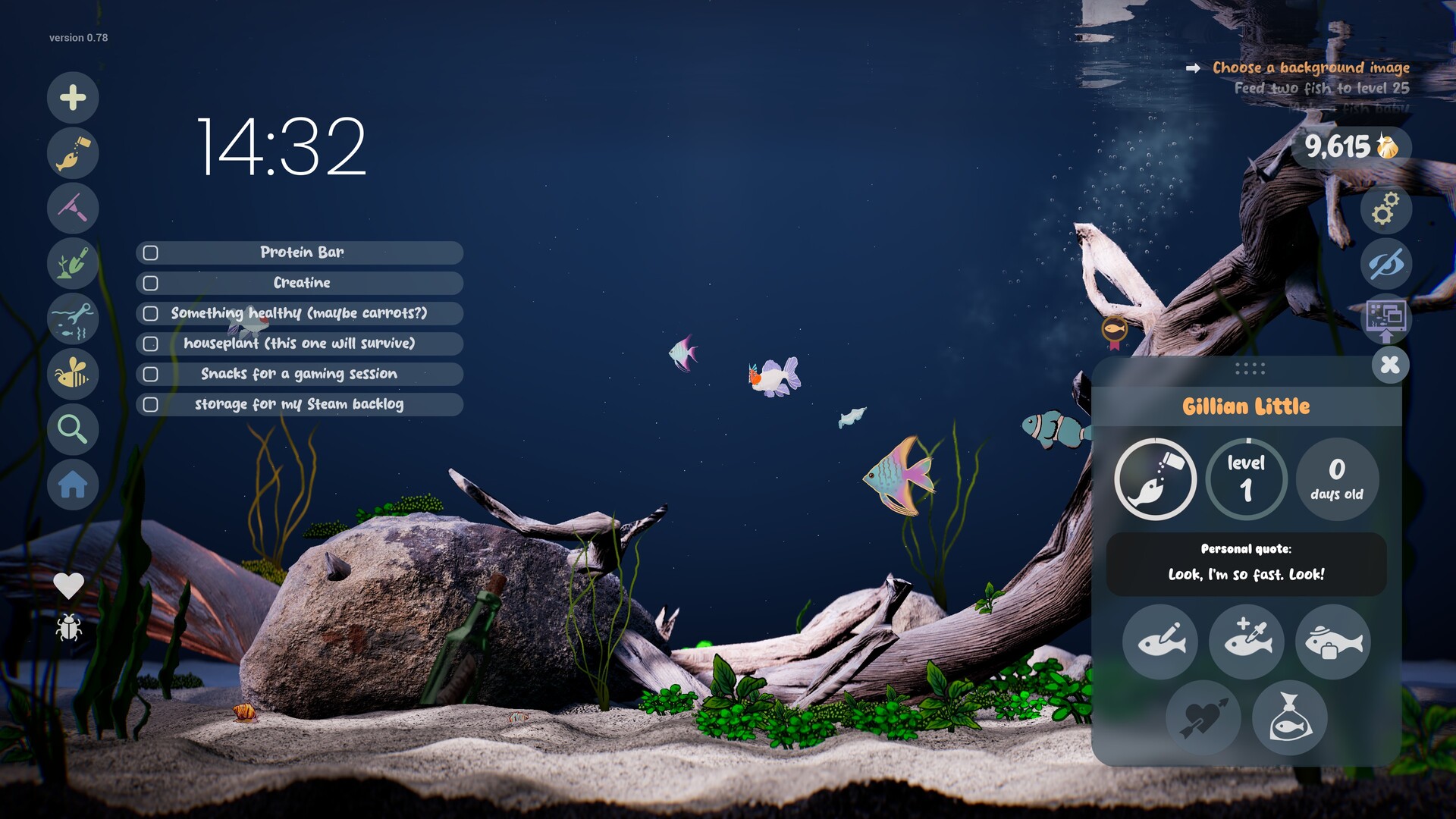
Start with a simple fish silhouette, fins, and eyes, or try a jellyfish, a shrimp-like creature, or a colorful gummy worm. Drawquarium also lets you draw plants and playful decorations such as sea mines and skyscrapers, so your aquarium can follow your imagination without demanding realistic art.
Choose an idea you feel comfortable finishing
| Drawing idea | Details |
|---|---|
| Simple fish with fins and eyes | Keep the body broad and the tail easy to distinguish. Let the outline carry the design before adding small markings. |
| Jellyfish-inspired drawing | Focus on the rounded upper shape and a loose outline underneath. Leave detailed shading for a later drawing. |
| Shrimp-like demo creation | Use a curved silhouette as your starting point. Simplify the smaller details until the overall shape feels readable. |
| Colorful gummy worm | Try a winding body with broad areas of color. A playful expression can give a simple outline plenty of personality. |
| Sea mine decoration | Use a bold outline and keep the surrounding decoration restrained if you want this drawing to stand out. |
| Skyscraper decoration | Try a tall silhouette with broad window markings. It makes a useful starting point for a deliberately unusual aquarium theme. |
Pick the idea whose outline you can picture most clearly. You can leave elaborate textures and shading for another session. If you would rather concentrate on arranging the aquarium, ready-made fish are also available.
Turn your idea into a readable fish
Templates can provide a starting outline, but the newer opening experience encourages drawing your own creation and may differ from older demo footage. Begin with the choices your game presents. A blank canvas is a supported starting point too.
- Choose a blank canvas or an available shape template to establish your starting outline. Use whichever makes the subject feel easiest to begin. The goal is a shape you feel comfortable completing.
- Draw the main silhouette so the subject is recognizable before decoration. For a simple fish, concentrate on the body, fins, and eyes. Keep tiny markings out of the way until the outline feels clear.
- Use the fill tools to establish broad areas of color. The expanded editor includes improved Fill Bucket tools. Choose colors with enough contrast that the face and fins remain easy to pick out.
- Use eye or fin stamps where they help you finish a difficult detail. The expanded editor includes stamps for eyes, fins, shapes, and textures. Keep the additions consistent with the simple outline you started with.
- Scroll near the part of the drawing you want to zoom into. This lets you focus on an awkward edge or facial detail. Resist adding detail everywhere just because you can inspect the picture closely.
- Save a color palette you would like to reuse across your aquarium. Saved palettes are part of the expanded editor. Repeating favorite colors can help later fish and plants look as though they belong together.
- Finish your creation and bring it into the aquarium to see the drawing come to life. Judge the design in the tank before deciding what needs more work. The developer has also added the ability to edit fish again later.
Give plants and decorations a shared style
Drawn vegetation can be placed around the aquarium wherever you want. If plants are still locked, make a ground fish to unlock them. For a manageable composition, repeat a leaf shape or color you already enjoyed using instead of making every plant completely different.
The tank's customization options include sand, lighting, rocks, driftwood, colors, and water level. Try arranging these around the drawings you most want to notice. Leave some visually quiet space around a detailed creature, or use a restrained background behind a brightly colored resident.
The full game advertises PNG import for artwork made elsewhere, including children's drawings. Use a favorite imported picture as the visual starting point for the surrounding plants and decorations. PNG import belongs to the full-game route; demo features have also been temporarily expanded and later reduced.
Let the residents add their own personality
Fish can react to food, bubbles, new arrivals, and their surroundings. They can also form friendships, rivalries, and relationships. Choose your drawings for their appearance and character, then enjoy watching those interactions develop.
For your next drawing, choose a simple subject from the table and finish its outline before planning the rest of the tank. If you are still stuck, Drawquarium's Idea Generator can provide inspiration. Take a prompt you like and simplify it until it feels enjoyable to draw.